United Airlines is blocking middle seats on its new Airbus A321XLR aircraft to cap capacity at 150 passengers, a strategy that allows the carrier to reduce crew requirements while offering a less-dense economy cabin on its newest narrowbody jets.
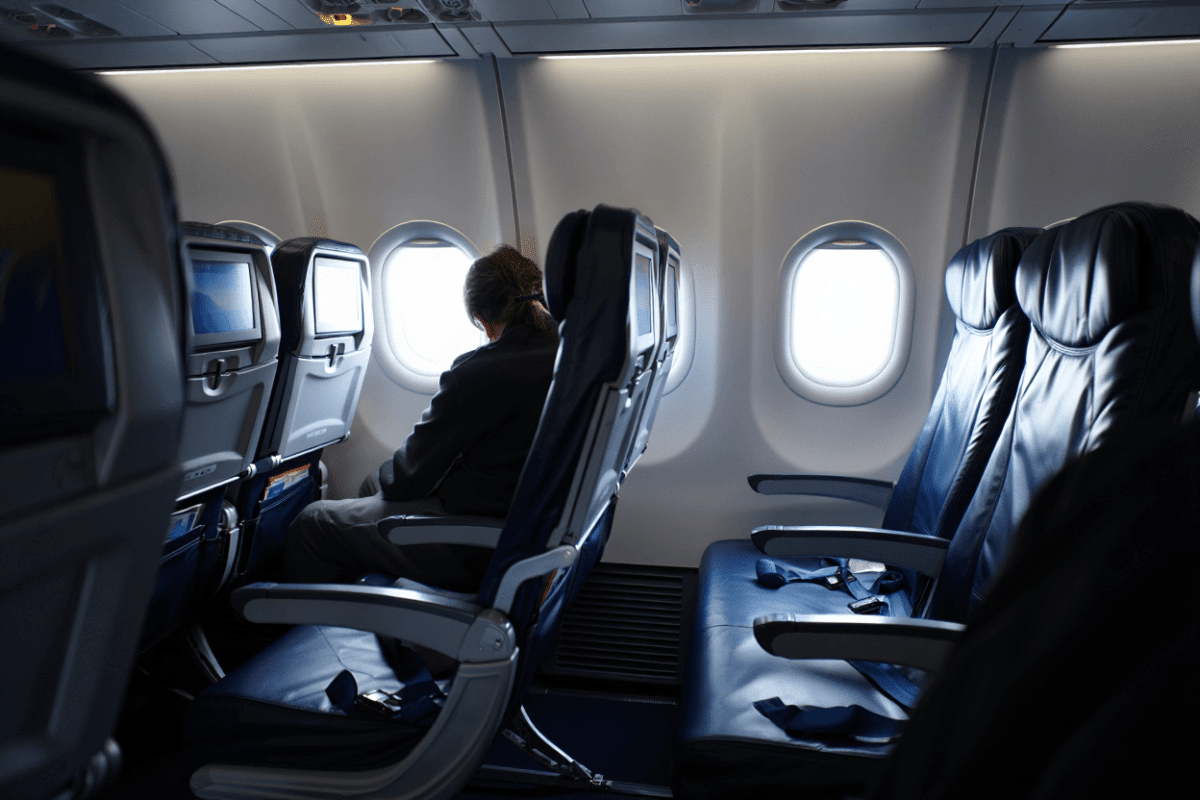
The aircraft will feature a total of 150 seats across three cabins: 20 Polaris business class suites, 12 Premium Plus seats, and 36 Economy Plus seats, with the remaining 82 seats in standard economy. By installing fixed tray tables in select middle seats to block them, United effectively reduces the aircraft’s usable capacity below the 151-seat threshold that would trigger additional crew staffing under Federal Aviation Administration rules.
The FAA requires one flight attendant for every 50 passenger seats, according to 14 CFR §121.391. At 150 seats, the A321XLR requires four flight attendants; without the blocked middle seats, the aircraft would exceed 150 seats and require a fifth attendant. This crew reduction directly lowers United’s operating costs on the aircraft, which the airline has ordered 50 of and expects to deploy on transatlantic and other long-haul routes starting in 2026.
The blocked-seat approach is sometimes called a “Eurobusiness” configuration, referencing the European practice of offering premium-economy-style seating with no adjacent middle seat. However, United’s implementation differs: the airline is not marketing the blocked seats as a premium product but rather using the capacity constraint as a structural cost-control measure. The middle seats will simply remain unavailable for passenger bookings, effectively creating a less-crowded economy cabin while maintaining the same physical seat dimensions.
United confirmed the strategy in June 2026 after details surfaced online, with the carrier acknowledging that blocking two middle seats serves both operational and commercial purposes. The tray-table blockage is a permanent fixture, not a temporary measure, making it a novel approach to fleet economics in the narrowbody segment. Historically, airlines have blocked middle seats for health or comfort reasons during pandemic periods, but using a permanent block to cap crew requirements is a more strategic use of the tactic.
The A321XLR’s configuration reflects United’s broader push to maximize premium seating and revenue on new aircraft. The plane offers 32 premium seats—20 Polaris suites and 12 Premium Plus—compared to 16 premium seats on the 757 it replaces, expanding the airline’s high-yield capacity on long-haul narrowbody routes where widebody aircraft would be too large or uneconomical.
Sources
- Simple Flying — reported FAA flight attendant requirement per 50 seats and United’s plan to block middle seats for crew reduction on the A321XLR
- MSN — confirmed fixed tray tables will be installed in middle seats to block them, capping capacity at 150 passengers
- Business Insider — reported the blocked-seat strategy and reduced-density cabin concept
- PYOK — detailed the middle-seat blockage mechanism and crew staffing rationale