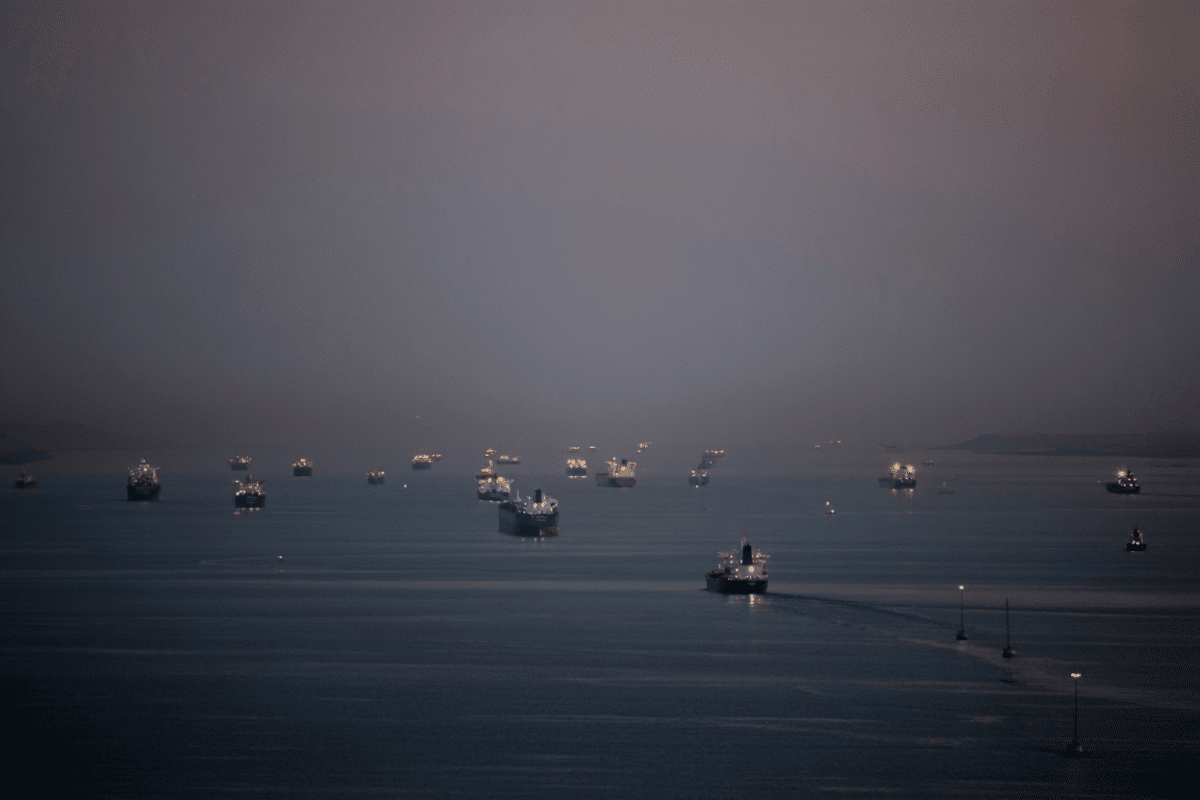
Tanker traffic through the Strait of Hormuz plunged to its lowest level in two months on July 13, 2026, as renewed U.S.-Iran strikes and attacks on vessels heightened safety concerns and disrupted one of the world’s most critical oil shipping routes. Based on data from maritime tracking firm Kpler, oil and gas tanker traffic fell to its lowest level since May 25, with just six vessels transiting the strait on Sunday—the lowest number in five weeks.
The collapse in shipping reflects the escalation of hostilities between the United States and Iran. U.S. forces completed another wave of strikes against Iran on Sunday, hitting dozens of targets at multiple locations with precision munitions, according to the U.S. Central Command. Iran’s Revolutionary Guards said on Monday that their navy stopped two ships in the Strait of Hormuz by shutting down their systems, though the vessels were not named.
Shipping industry sources said vessels were increasingly switching off their public AIS tracking transponders, making it difficult to determine the full number of ships crossing the waterway. Most tankers that exited the strait last weekend switched off their transponders when crossing, according to Kpler data reviewed by Reuters. This data obscurity compounds the challenge of tracking real-time traffic through the chokepoint, which normally handles about 20 percent of the world’s seaborne oil.
Among the few visible tankers crossing the strait were the Very Large Crude Carrier Humanity, laden with 2 million barrels of Iranian oil, and the Capetan Andreas, carrying about 500,000 barrels of Kuwaiti oil products, according to ship-tracking data. Three empty tankers entered the Gulf to load oil. At least three pairs of tankers were engaged in ship-to-ship transfers outside Hormuz off Oman’s coast, a practice that has enabled faster deliveries of oil onto waiting ships that do not need to sail through the strait.
Ship broker Gibson warned of the broader consequences of prolonged disruption. “Should the renewed escalation in the strait lead to another prolonged closure of Hormuz, the world will find itself in a much tougher spot,” Gibson said in a report. “With global inventories rapidly depleted in recent months, this is a recipe for much tighter supply, higher prices and significant downside risk for tanker markets.”
The U.S. Navy-led Joint Maritime Information Center noted that commercial traffic through the Strait of Hormuz “continued at reduced levels,” with “traffic patterns continued to reflect operator caution following recent attacks.” A container ship sustained damage from an unknown projectile that caused a fire in the engine room on Sunday, according to the center.
The renewed violence marked a sharp reversal from late June, when tanker traffic had begun recovering following a U.S.-Iran agreement. On June 23, 2026, shipping traffic through the strait had reached its highest level since the conflict began in late February, with multiple tankers crossing daily. That tentative recovery has now collapsed under the weight of fresh military escalation and safety fears among shipowners and operators.
Sources
- Reuters — tanker traffic data from Kpler, vessel movements, U.S. and Iranian military actions, Gibson ship broker analysis
- U.S. Central Command — confirmation of strikes against Iran on July 13, 2026
- Kpler — maritime tracking data on vessel transits and traffic levels