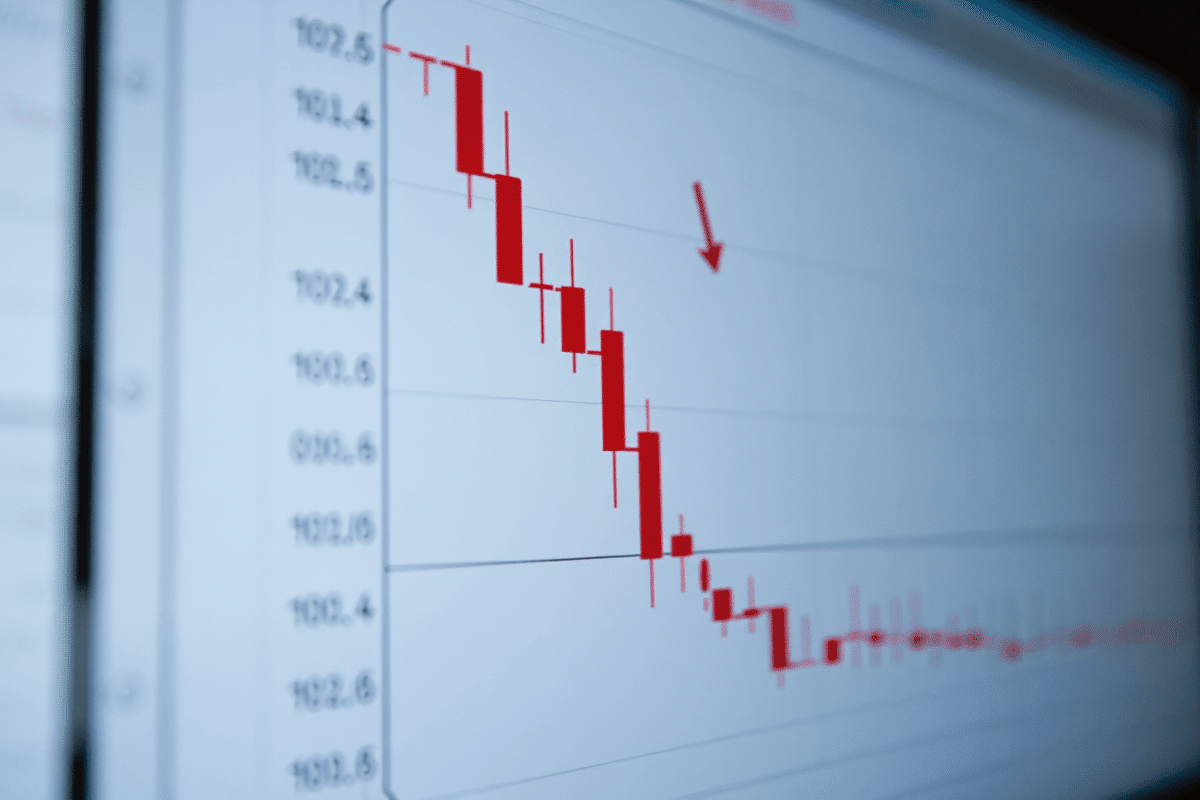
The US Dollar Index slipped to 101.10 on July 14, 2026, marking a sharp reversal from its June highs as the Federal Reserve’s rate outlook shifted decisively lower following weak labor market data. The decline reflects mounting uncertainty about whether the central bank will hold rates steady or begin tightening later this year.
The dollar’s retreat was triggered by June’s non-farm payrolls report, which showed just 57,000 jobs added to the economy, far below expectations and a significant slowdown from May’s already-weak 129,000 revised figure. Markets responded immediately, slashing expectations for a Fed rate hike and pricing in roughly a 65% probability that the central bank will hold rates at 3.50%–3.75% when it meets on July 29, according to Cambridge Currencies analysis.
The payrolls shock directly contradicted the Federal Reserve’s hawkish June meeting, when nine of eighteen officials projected at least one rate hike by year-end and the median 2026 inflation forecast was raised to 3.8%. That signal sent the dollar surging to a 13-month high near 101.60 in late June. But the labor market data forced a rapid reassessment.
Fed Chair Kevin Warsh acknowledged the shift in tone at the European Central Bank Forum in Sintra, stating that inflation expectations and inflation risks had eased in recent weeks—a notable softening from the June meeting’s hawkish stance. The dollar index fell 0.52% on the payrolls miss, its biggest one-day drop in two months, according to Cambridge Currencies.
The tension now facing the Fed is stark: inflation at 4.2% in May suggests tightening remains warranted, while the deteriorating labor market points the opposite direction. That divergence will likely dominate the July 29 decision. The June consumer price index, due July 14, is expected to fall from 4.2% to around 3.9%, though core inflation is forecast to hold near 2.9%—a split that could leave the Fed room to hold without committing to rate cuts.
The dollar’s weakness also reflects a broader shift in market sentiment about the Federal Reserve’s path. Earlier this year, rate-cut expectations had dominated; in June, the Fed’s dot plot shifted sharply hawkish. Now, with labor market momentum fading and inflation expectations easing, traders have pared back tightening bets from more than 50 basis points of hikes by mid-2027 to around 36.5 basis points, according to City Index analysis.
Sources
- Trading Economics — US Dollar Index level of 101.0994 on July 14, 2026
- Cambridge Currencies — June payrolls at 57,000; dollar index decline of 0.52%; Fed hold probability at 65% for July 29 meeting
- TD Economics — Core PCE inflation revised to 3.3% for 2026 in June FOMC meeting
- City Index — Fed funds futures pricing; Fed Chair Warsh’s remarks on inflation expectations easing
- Federal Reserve — June 17, 2026 FOMC statement and projections