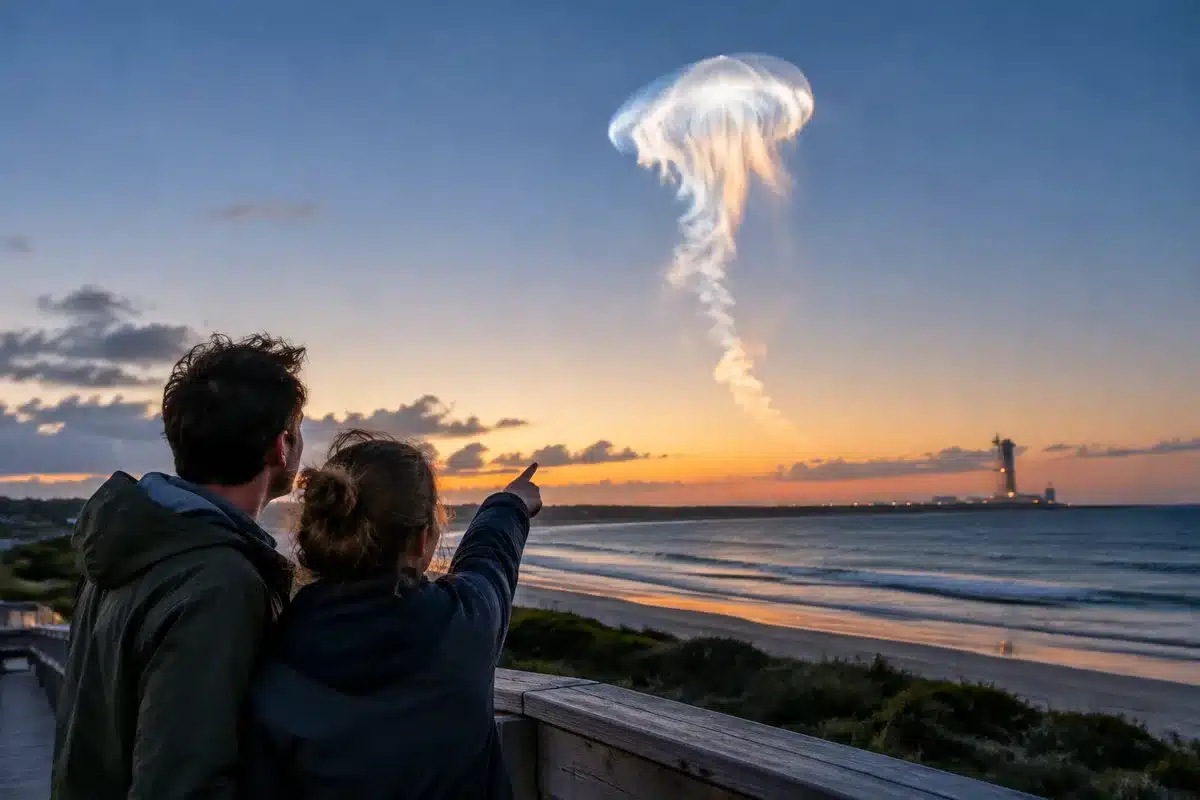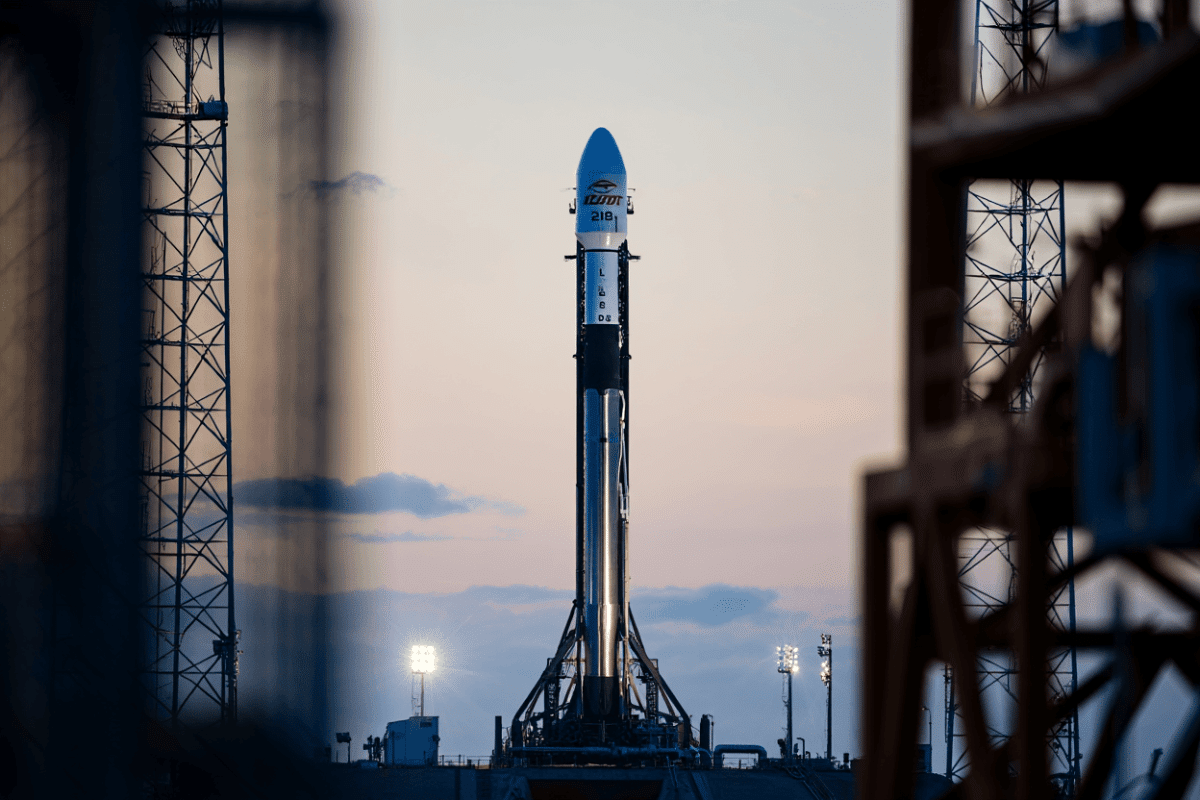
SpaceX launched a Falcon 9 rocket carrying 29 Starlink satellites from Cape Canaveral early Tuesday morning, continuing the company’s rapid deployment of broadband internet coverage to low Earth orbit.
Liftoff occurred at 5:10 a.m. ET on July 14 from Space Launch Complex 40 at Cape Canaveral Space Force Station in Florida, according to Florida Today. The mission, designated Starlink 10-45, successfully deployed the batch of satellites into orbit as planned.
The Falcon 9 booster supporting the launch, identified as B1080, completed its 28th flight, according to Spaceflight Now. The first-stage booster landed on the A Shortfall of Gravitas drone ship in the Atlantic Ocean, where it will be recovered for future reuse. No sonic booms were expected in the Brevard County area due to the offshore landing.
Starlink is SpaceX’s satellite internet megaconstellation, designed to deliver high-speed broadband to users worldwide. The satellites operate in low Earth orbit at approximately 342 miles (550 kilometers) above the planet’s surface, according to Space.com. As of June 2026, the constellation consisted of roughly 10,413 operational satellites, according to Wikipedia, making it the world’s largest active satellite network.
The low-Earth orbit approach gives Starlink a significant advantage over traditional satellite internet services. By positioning satellites much closer to Earth than geostationary alternatives, the system achieves lower latency and faster data transmission speeds, enabling it to support streaming, online gaming, and video conferencing. The dense constellation ensures continuous coverage across most of the globe by maintaining multiple satellites overhead at any given location.
SpaceX has been accelerating Starlink launches throughout 2026, deploying dozens of satellites per mission to expand network capacity and service reliability. Each batch of 29 satellites adds to the megaconstellation’s growing footprint, bringing broadband access to remote and underserved regions that lack traditional fiber-optic or cellular infrastructure.
Sources
- Florida Today — Live launch coverage and mission details for Starlink 10-45 from Cape Canaveral, including liftoff time, booster landing location, and launch window information.
- Spaceflight Now — Confirmation that Falcon 9 booster B1080 completed its 28th flight on the Starlink 10-45 mission.
- SpaceX — Official mission information confirming 29 Starlink satellites and booster flight history.
- Space.com — Orbital altitude and characteristics of Starlink satellites in low Earth orbit.
- Wikipedia — Constellation size and operational satellite count as of June 2026.