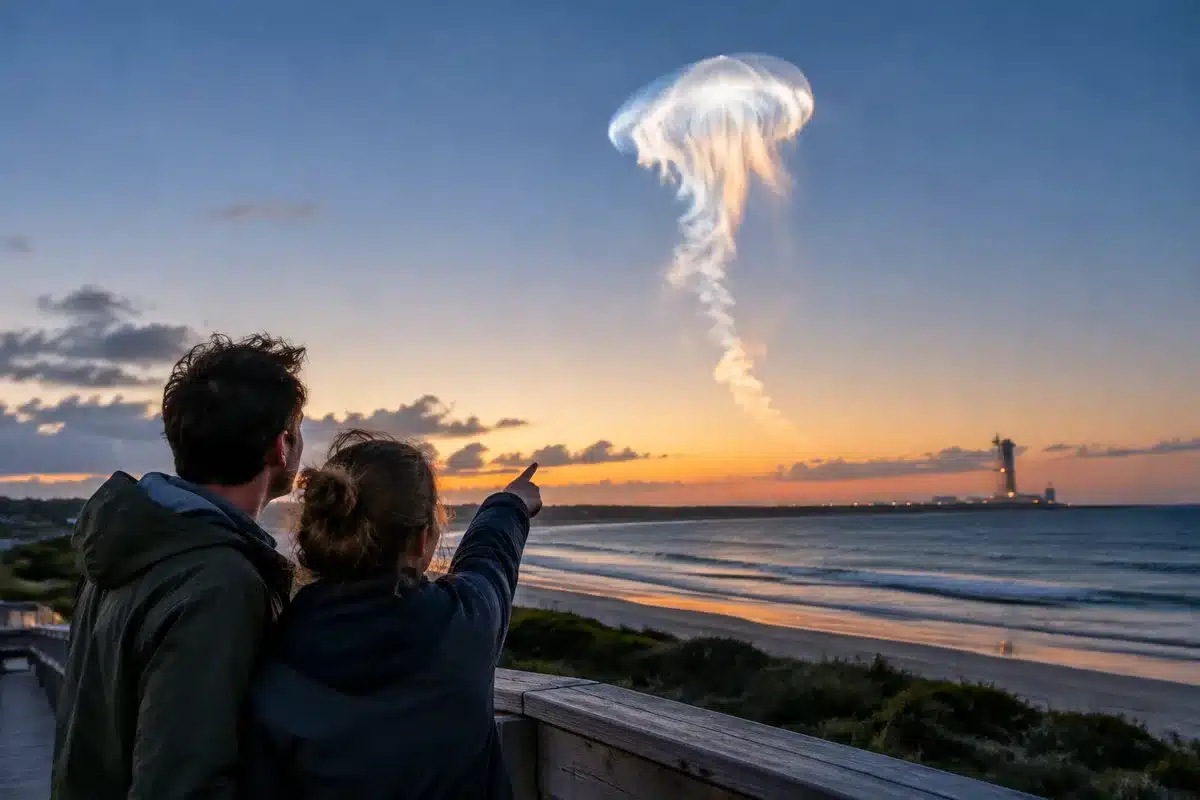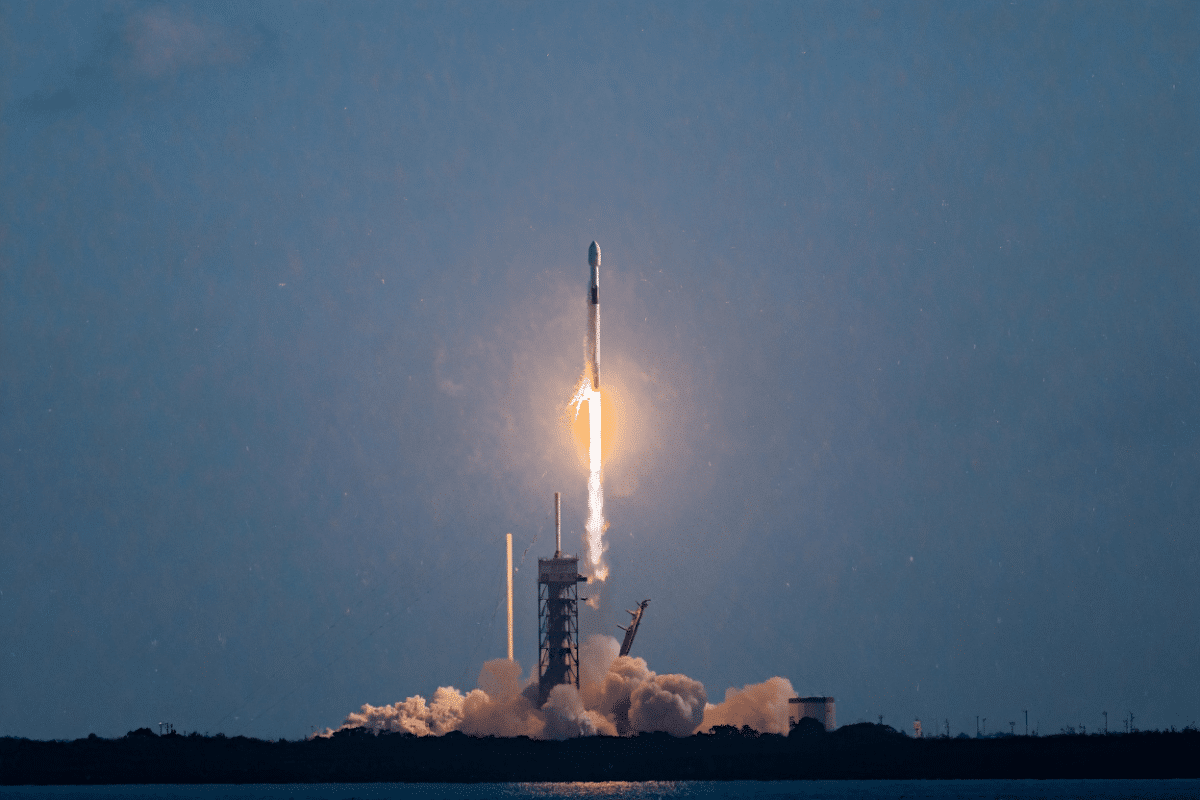
SpaceX launched a Falcon 9 rocket carrying 29 Starlink satellites into orbit from Cape Canaveral Space Force Station early Tuesday, July 14, continuing the company’s rapid pace of rocket launches. Liftoff occurred at 5:10 a.m. EDT from Launch Complex 40, with the mission designated Starlink 10-45.
The booster completed its 28th flight, adding to SpaceX’s growing record of rocket reuse. Previous missions flown by the same first stage include Axiom 2, Euclid, Axiom 3, the CRS-30 International Space Station resupply mission, SES ASTRA 1P, the NG-21 ISS resupply mission, and 21 Starlink missions, according to Florida Today. After deploying the satellites, the first stage landed on the A Shortfall of Gravitas drone ship in the Atlantic Ocean.
The Starlink constellation has grown substantially through 2026. As of June 2026, the network consisted of approximately 10,413 satellites in low Earth orbit, with 10,397 operational, according to Wikipedia. SpaceX had reported more than 9,600 Starlink broadband and mobile satellites in low Earth orbit as of March 31, 2026, indicating rapid expansion of the network’s capacity throughout the year.
Falcon 9 has become the world’s most frequently launched orbital rocket, with the booster reuse program now routine. SpaceX’s ability to reflew the same booster dozens of times has fundamentally changed spaceflight economics, reducing launch costs and enabling the company to deploy satellites at an accelerated pace. The 28-flight record on this particular booster demonstrates the durability of the design and SpaceX’s operational proficiency in managing a large fleet of reusable rockets.
Sources
- Florida Today — Launch time, mission details, booster flight history, and drone ship landing confirmation
- Wikipedia — Starlink constellation size as of June 2026
- New Space Economy — Starlink satellite count as of March 31, 2026