Meta stock surged 15% in its best week since early 2024, driven by announcements of a paid AI API, a custom chip production milestone, and plans for a new cloud computing business that would monetize the company’s massive AI infrastructure spending.
The rally came after Meta Platforms launched Muse Spark 1.1, a multimodal reasoning model with a paid developer API priced at $1.25 per million input tokens and $4.25 per million output tokens. That pricing undercuts rivals significantly: Anthropic’s Claude Opus 4.8 charges $5 for input and $25 for output per million tokens, while OpenAI’s GPT-5.5 runs at approximately $5 and $30. CEO Mark Zuckerberg said on X that “the pricing from some of the other labs is very extreme and has very high margins,” and Meta is “able to offer frontier or very high-level intelligence at a much more affordable cost.” New accounts receive $20 in introductory credits to test the model.
The API launch represented Meta’s first commercial charge for a frontier AI model. Muse Spark 1.1 supports agentic tasks—autonomous tool use, computer interaction, and code development—with a one-million-token context window. The model is compatible with both OpenAI and Anthropic SDK formats, meaning developers can switch platforms with only a change to the base URL and API key.
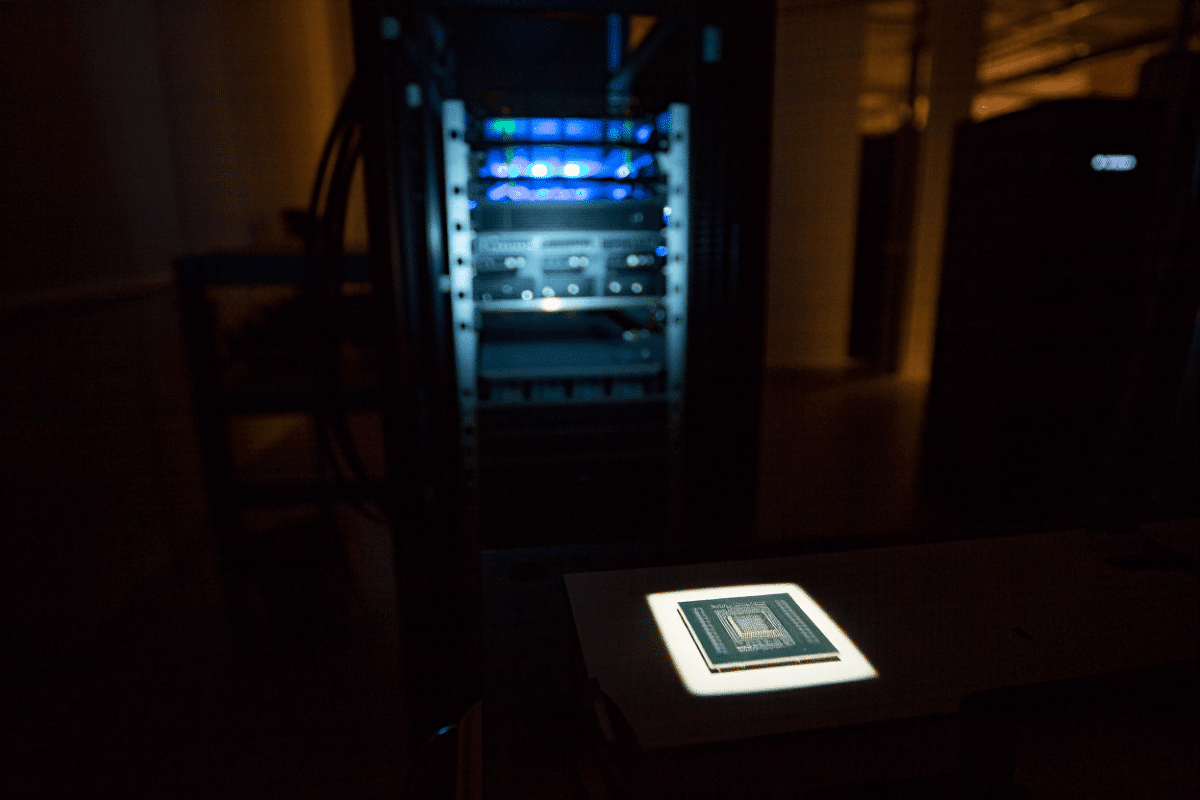
On the same day, Reuters reported that Meta’s custom AI chip, code-named Iris, will enter manufacturing in September 2026, according to an internal company memo. Iris is part of Meta’s MTIA (Meta Training and Inference Accelerators) program, designed to handle ranking, recommendation, and inference workloads across Meta’s products. The chip, developed with Broadcom and manufactured by Taiwan Semiconductor Manufacturing Co., cleared its testing phase without significant architectural issues. Meta plans to release a new MTIA generation approximately every six months through 2027—roughly double the typical pace in the chip industry. The strategic goal is to reduce the marginal cost of compute over time by shifting workloads to in-house silicon while continuing to use Nvidia and AMD GPUs for the heaviest training runs.
Bank of America analyst Justin Post noted that Meta may have engineered significant cost savings, pushing the company onto the bank’s top picks list. The compute buildout targets 7 gigawatts of capacity by the end of 2026, scaling to 14 gigawatts in 2027. For context, one gigawatt can power approximately 750,000 homes.
The week’s announcements culminated with CEO Mark Zuckerberg confirming in a Bloomberg interview that Meta is developing plans to lease its AI computing resources to outside customers—effectively creating a cloud computing business to compete with Amazon Web Services, Microsoft Azure, and neocloud providers. Analysts at Jefferies compared the approach to how Amazon built AWS by monetizing excess warehouse-routing technology before AWS became the dominant cloud provider. BNP Paribas senior analyst Nick Jomes said Meta is “well positioned to generate ample revenue to support its spending, driven by monetization of its own AI initiatives, advertising share gains, incremental subscription revenue, the potential cloud offering, and fees for external use of its AI models.” The analyst estimated Meta could raise its 2026 capital expenditure guidance to between $135 billion and $155 billion when it reports second-quarter results.
Meta had raised its 2026 capex guidance to as high as $145 billion in April, a move that initially drew investor concern about spending with no visible payoff. Wall Street had been asking throughout the year how that infrastructure investment would generate returns. The week’s announcements—the paid API, the chip production timeline, and the confirmed cloud business—provided concrete answers. Meta shares climbed approximately 15% over the week ending July 10, closing at roughly $669 per share and erasing the stock’s 13% year-to-date decline.
The announcements also included a CAD $13 billion (roughly USD $9.2 billion) investment in a 1-gigawatt AI data center campus in Sturgeon County, Alberta—Meta’s first Canadian facility and largest outside the United States. The campus is expected to create more than 300 permanent operational jobs and support over 3,000 construction workers at peak activity.
Sources
- Tech Times — comprehensive coverage of Meta stock surge, Muse Spark 1.1 API pricing and launch, Iris chip production timeline, Alberta data center investment, and cloud business confirmation
- CNBC — Meta’s 15% weekly surge, sentiment improvement around AI strategy, analyst commentary from Bank of America and BNP Paribas
- Reuters — Iris chip production timeline, internal memo details, Muse Spark 1.1 launch and API details
- Yahoo Finance — Meta stock gains 15% in a week on AI model launches and Iris chip announcement
- Bloomberg — Meta developing cloud business to sell excess AI compute, Zuckerberg interview confirmation
- DataCamp — Muse Spark 1.1 API pricing details ($1.25 input, $4.25 output per million tokens)
- the-decoder.com — API pricing comparison with OpenAI and Anthropic flagship models