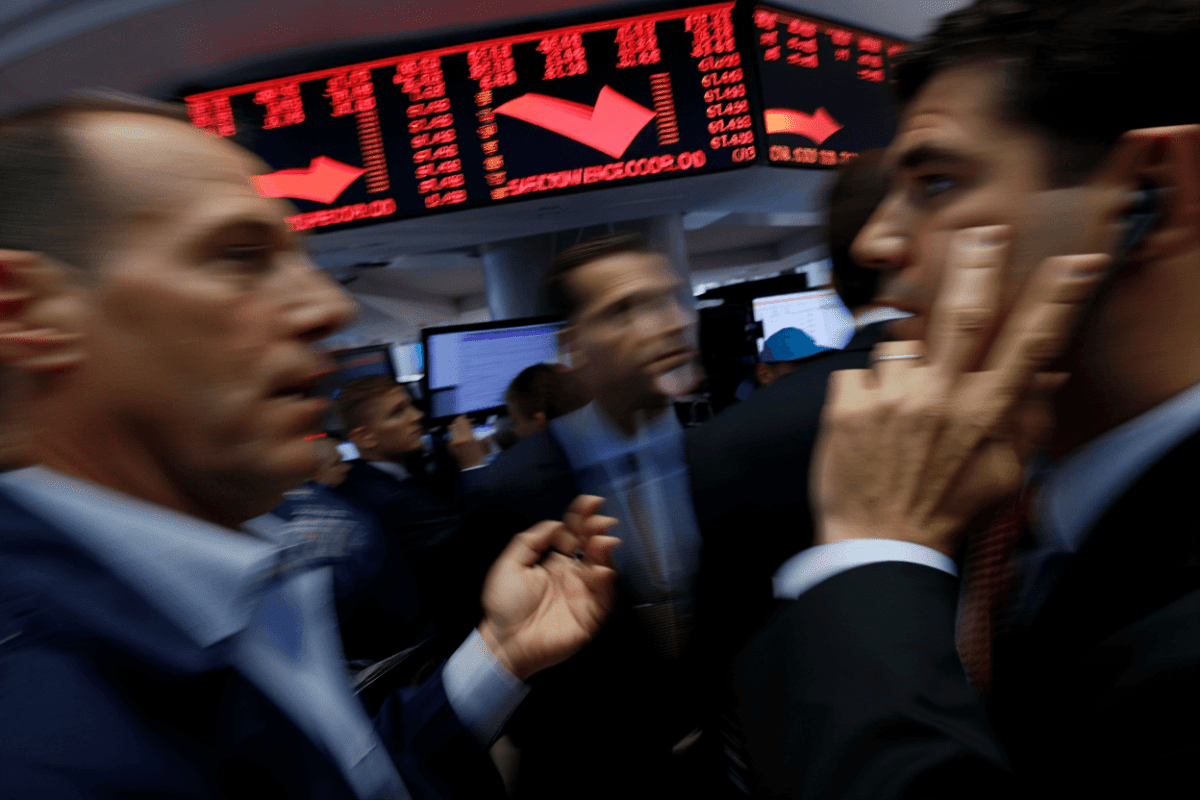
South Korea’s KOSPI index entered bear market territory on July 8, falling more than 20% from its record close of 9,114.55 on June 22, marking a stunning reversal for the world’s best-performing stock market of 2026.
The benchmark closed 5.35% lower at 7,246.79, its lowest close since May 20, as sharp swings in chipmaker stocks over artificial intelligence worries and growing concerns about risky investment products rattled investors. The 20% decline from the June peak meets the technical definition of a bear market.
Semiconductor giants Samsung Electronics and SK Hynix led the selloff, falling 6.3% and 5.7% respectively, after U.S. semiconductor stocks slumped overnight. The Philadelphia Semiconductor Index dropped 4.7% as investors questioned whether AI-related spending could be sustained. Samsung’s strong second-quarter earnings—a 19-fold jump in profit—failed to reassure markets worried about a potential slowdown in memory chip prices.
Han Ji-young, an analyst at Kiwoom Securities, noted that “there seems to be spill-over effects from a slump in the previous session, which came despite Samsung Electronics’ strong earnings, while there are worries about a slowdown in memory price growth and uncertainty over an earnings ‘peak-out,'” according to Reuters.
The KOSPI’s concentration in chip stocks has magnified the sector’s volatility. Samsung and SK Hynix together account for nearly half of the index’s weight and have contributed roughly two-thirds of its gains this year. The selloff mirrored weakness in U.S. technology stocks, with the tech-heavy Nasdaq Composite falling more than 1% amid broader caution on chipmakers.
Government Pledges to Monitor Market Risks
South Korea’s Finance Minister Koo Yun-cheol pledged to closely monitor risk factors that could heighten stock market volatility, citing concerns about single-stock leveraged exchange-traded funds (ETFs) linked to chipmaker stocks. The ministry said market swings have intensified due to foreign and institutional investor profit-taking, portfolio rebalancing, and changing expectations around the global artificial intelligence sector.
“Increasing concentration in the semiconductor sector has become a factor raising financial market volatility, with the impact of fluctuations in the chip sector on the whole stock market growing,” the ministry said in a statement, according to The Economic Times. Deputy Finance Minister Moon Ji-sung added that pressure from foreign investor profit-taking and portfolio rebalancing was expected to ease as SK Hynix’s upcoming U.S. share sale would bring dollar-selling related to won demand.
Despite the recent correction, the KOSPI index remains the world’s best-performing major stock index in 2026, having gained more than 68% so far this year. Goldman Sachs maintains a positive outlook on South Korea’s market, noting that incremental foreign inflows have begun rotating toward other AI-related beneficiaries and industrials beyond semiconductors.
Sources
- Reuters — KOSPI’s 20% decline from June record, Samsung and SK Hynix performance, Finance Minister Koo’s pledge to monitor risks, and market context
- The Economic Times — Finance Minister Koo’s statement on semiconductor concentration and market volatility, Deputy Finance Minister Moon’s comments on won dynamics