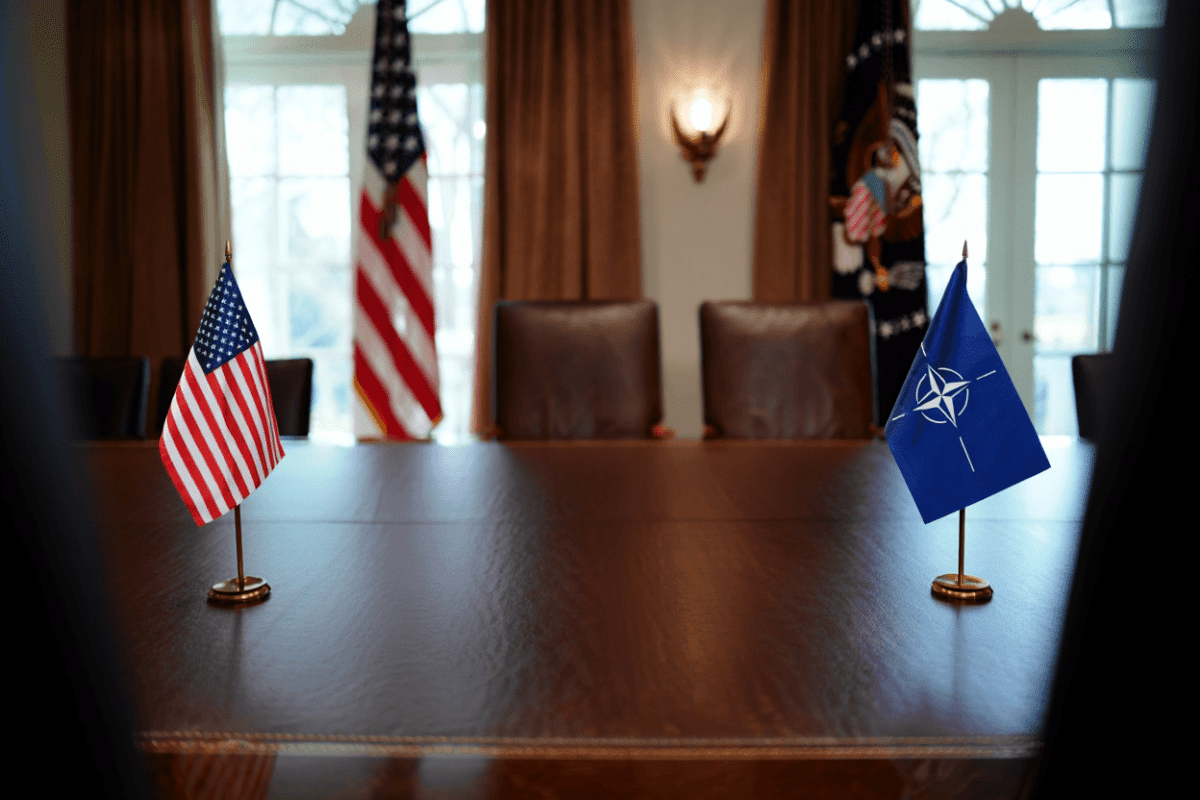
NATO Secretary General Mark Rutte arrived in Washington today to meet with President Trump and senior administration officials, seeking to shore up the transatlantic alliance after months of tension over European support for the U.S. war in Iran and Trump’s plans to reduce American military commitments in Europe.
Rutte’s three-day visit, running through June 25, places him at the White House on Wednesday to meet directly with Trump, according to a NATO announcement. The trip comes as allies prepare for a critical summit in Ankara scheduled for July 7-8, where leaders will address defense spending and NATO’s future direction.
Tensions between Washington and its European allies have intensified since Trump launched military operations against Iran without consulting NATO partners. Several European countries initially refused to allow U.S. forces access to bases for refueling and operations related to the conflict. Trump responded by publicly rebuking allies he felt had failed to support the campaign, calling NATO a “paper tiger” and threatening to punish nations he deemed unhelpful.
The friction deepened further after Defense Secretary Pete Hegseth announced last week a six-month review of U.S. troop deployments in Europe, signaling potential reductions. Hegseth said the review would ensure NATO moves “fast and irreversibly toward Europe leading,” but did not specify whether it will result in a drawdown of American forces on the continent.
According to alliance sources cited by Euronews, Rutte hopes to repair relations between Washington and NATO allies after months of transatlantic friction. The recent U.S.-Iran agreement to end hostilities has reduced immediate tensions, with NATO officials believing the deal places Trump “in a better place” heading into the Ankara summit.
A central focus of Rutte’s visit is the U.S. reduction of certain military capabilities provided to NATO. The Pentagon has informed allies it intends to scale back long-range strike aircraft such as B-2 and B-52 bombers, and reduce the number of F-16 and F-35 fighter jets available for NATO missions. The U.S. also recently cut the number of fighter jets and warships it would deploy for NATO’s response in the early stages of a conflict, according to reporting from earlier this month.
Defense spending remains a contentious issue. NATO allies committed last year at The Hague summit to invest 5 percent of gross domestic product annually on core defense requirements by 2035. Rutte has expressed frustration with the pace of progress in some capitals and intends to press the issue forcefully in coming weeks. European and Canadian defense spending increased by more than $90 billion in 2025 compared to 2024, according to recent announcements from NATO leadership.
Rutte will also meet with members of Congress and other senior Trump administration officials during his stay. The trip precedes Thursday’s NATO defense ministers’ meeting in Brussels, where U.S. Defense Secretary Hegseth is expected to attend, providing another opportunity for high-level discussions on alliance priorities.
When Trump met with Rutte in April, the president expressed his “disappointment” with NATO and accused allies of abandoning the U.S. during the Iran conflict. Trump told reporters at the time that he would “remember” which countries failed to support American operations, signaling potential consequences for those deemed insufficiently helpful.
Sources
- NATO — Secretary General visit announcement and defense ministers progress report
- The Hill — Details on Rutte’s meeting with Trump, Hegseth’s NATO review announcement, and U.S. troop deployment tensions
- Euronews — Background on Rutte’s goals for the visit, alliance source commentary, and context on Iran war tensions