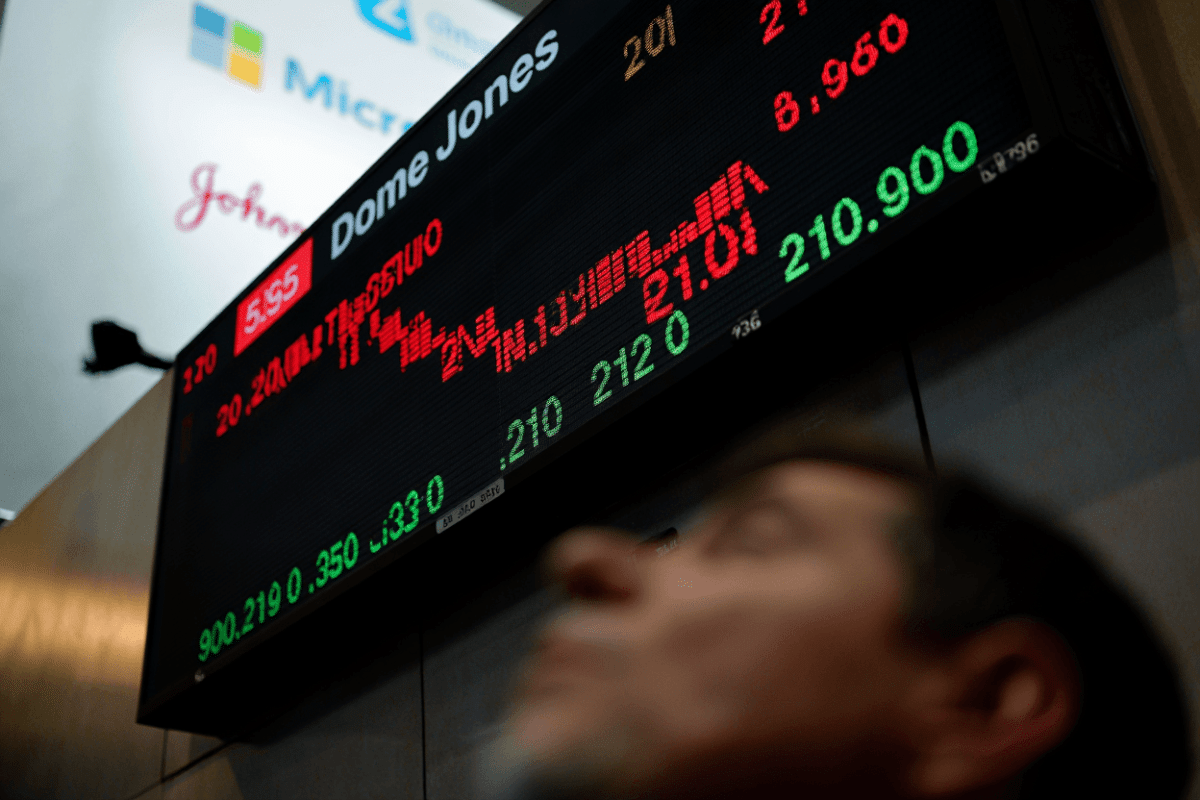
The Dow Jones Industrial Average tracks 30 blue-chip US stocks, making it one of the oldest and most widely followed stock market indices in the world.
The index is maintained by S&P Dow Jones Indices, an entity majority-owned by S&P Global, which produces, maintains, licenses, and markets the benchmark as one of the world’s leading resources for investable indices. The Dow uses a price-weighted methodology rather than a market-cap-weighted approach, meaning higher-priced stocks have a greater influence on the index’s movement.
The 30 companies in the Dow span nearly all industries except transportation and utilities, providing a broad snapshot of the US economy. Companies like Apple, Microsoft, Amazon, Nvidia, and JPMorgan Chase represent the technology, finance, and consumer sectors that dominate the index. The Dow’s components are regularly reviewed and adjusted to reflect changes in the economy and the broader market.
A Century of Evolution
The Dow Jones Industrial Average didn’t always include 30 stocks. The index started with just 12 companies in 1896, mostly in basic materials and heavy industry such as American Cotton Oil, American Sugar, General Electric, and US Rubber. In 1916, the DJIA was expanded to 20 components, and then on October 1, 1928, it reached its current size of 30 stocks, where it has remained for nearly a century.
The 1928 expansion coincided with a period of rapid economic growth in the US, though the expansion occurred just before the stock market crash of 1929. From 1920 to late 1929, the Dow experienced a long bull run, rising from 73 to 381 points before the crash wiped out nearly half its value by mid-November 1929, according to the Federal Reserve History.
Why the Dow Matters
The Dow 30 serves as a quick temperature check of the US economy and stock market. Because it tracks thirty of America’s biggest and most established companies, movements in the Dow often signal broader trends in investor sentiment and economic health. The index is price-weighted, meaning a $1 move in a $300 stock has the same impact as a $1 move in a $100 stock, which differs from broader indices like the S&P 500 that use market-cap weighting.
While the Dow represents only 30 companies out of thousands traded in the US market, its historical longevity and focus on large, stable firms have made it a benchmark trusted by investors worldwide for gauging overall market performance.
Sources
- S&P Global — confirmed the Dow as a price-weighted measure of 30 US blue-chip companies covering all industries except transportation and utilities
- Wikipedia — provided historical detail that the Dow expanded to 30 stocks in 1928 and is maintained by S&P Dow Jones Indices
- Breaking Into Wall Street — explained that the Dow tracks 30 blue-chip companies with consistently stable earnings, and that it initially included 12 stocks before expanding
- Investopedia — confirmed the 1928 expansion to 30 companies and that the Dow tracks thirty of America’s biggest and most established companies
- Corporate Finance Institute — documented that the Dow was expanded from 12 stocks to 20 in 1916, then to 30 in 1928
- Federal Reserve History — reported that the Dow rose from 73 to 381 points between 1920 and late 1929, then lost nearly half its value by mid-November 1929